Collaboration at the core of our action

Ongoing collaborative projects
Visual Narratives for Everyone: ENACA
The global visual narrative market, spanning comics, bande dessinée, manga, and webtoons, is currently undergoing a massive digital explosion. With digital sales accounting for over 76% of Japan’s manga market in 2025, it is clear that visual storytelling is now a digital-first industry. However, this rapid growth is meaningless if it excludes a portion of the population. To address this, the ENACA Project was created to bridge the gap between this booming market and the need for inclusive reading experiences.
What is the ENACA Project?
ENACA, which stands for Enhancing Accessibility in Comic Albums, represents a strategic commitment to making digital visual narratives inherently inclusive for all readers.
Traditionally, making visual media accessible meant creating adaptations that merely summarised the artwork, thereby flattening and linearising the storytelling. The ENACA project takes a completely different, cutting-edge approach to ensure that readers get an experience that is faithful to the original artistic intent.
How It Works: The Technology Behind the Vision
To preserve the magic of visual storytelling, ENACA utilises a sophisticated “multimodal” approach. It integrates advanced technologies to tackle the core technical challenges of making comics accessible:
- Computer Vision and AI: The project uses computer vision and Large Language Models (LLMs), alongside cognitive science, to analyse visual content deeply.
- Character and Dialogue Analysis: The technology is being trained to perform pixel-level character segmentation and analyse dialogue across fragmented comic layouts.
- Intelligent Narration: By understanding the visuals and text together, it can generate context-aware narration that translates complex panels into an engaging, accessible format.
The Team Behind ENACA
This project brings together a collaborative consortium of experts in research, publishing, and accessibility. The initiative is led by La Rochelle University (L3i) and Mangas.io that include EDRLab,, Human Science Toulouse University, and the Valentin Haüy Association.
Building a “Born-Accessible” Future
The most crucial aspect of the ENACA Project is that its research does not remain theoretical. The project is dedicated to translating these innovative findings into global industrial standards.
By driving the evolution of the EPUB standard (the “Swiss Army knife” of digital publishing) and enhancing the multimodal Divina (Digital Visual Narrative) format, EDRLab ensures these accessibility tools can be widely adopted by the industry. Ultimately, ENACA is building a framework for “born-accessible” digital comics, ensuring that the future of visual storytelling is open and accessible to all readers right from the moment of publication.
ThinkPub
Empowering publishing through knowledge and innovation
The main goal of the ThinkPub project (2024 to 2027) is to enable European publishing landscape to better adapt to the new realities of the digital disruption, thus making the European book sector more sustainable and creating more jobs.
Through an innovative education and training programme, ThinkPub offers a set of advanced digital tools within an online “Library of Digital Learning Objects”.
News about ThinkPub
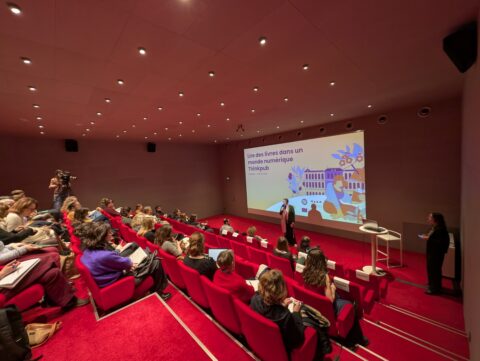
Dans le cadre du projet européen ThinkPub.eu, EDRLab déploie un programme de formations gratuites conçues pour accompagner les acteurs...
Date and Time: 17 October at 1 PM Location: THE ARTS+ Stage We are thrilled to announce the launch...

Qualebook
Digital publishing has developed appropriate industrialization and standardization processes, such as the EPUB format, but is not immune to external injunctions linked to legal provisions and societal issues.
To remain profitable while meeting the expectations of audiences and funders, publishing houses need to acquire a wide range of skills. Digital production teams cannot confine themselves to typography, performance, interoperability, accessibility, eco-design, security or personal data management. It is imperative to coordinate these diverse areas of expertise.
All digital publishing professions are involved, and the challenges are in terms of decision-making, risk management, training, methods, resources and governance. To integrate and assimilate diverse outside expertise, digital publishing needs to equip itself with quality assurance, management and control tools for design, production and distribution, as well as for training and skills certification.
News about Qualebook
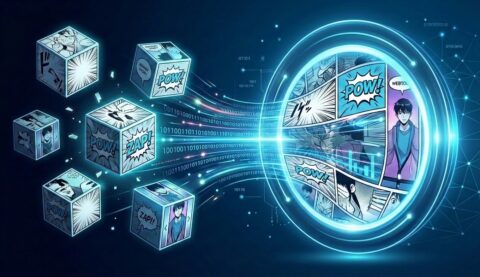
Engineering Inclusive Digital Visual Narratives: EDRLab’s Strategy for Interoperability and Accessibility The global visual narrative market—spanning bande dessinée, manga,...

Interview with Gautier Chomel, accessibility expert In early 2026, the Standards & Norms working group of the SNE’s Digital...
EDRLab completed 2025 on a solid note and is stepping into 2026 with a clear mission: to develop and...

Qualebook has launched as a shared, open-quality reference for digital books, designed to support both day‑to‑day production and long‑term...

As digital publishing has entered the age of maturity, it has had to develop industrialization processes of a new...
Radiance: studying solutions for image description in scholarly backlist collections
In 2023, the abelab.eu project identified the accessibility needs of existing backlists, recognised the importance of generative AI, and emphasised that it must be integrated with human oversight and professional evaluation. Since then, various stakeholders—publishers, service providers, and distributors—have begun implementing these technologies and providing user-friendly interfaces.
However, significant challenges persist: understanding AI’s potential, documenting its applications, and developing relevance markers to guide human operators. Our mission is to equip the entire ecosystem with the necessary tools, guides, and connectors while supporting the professionalisation of practices.
We are taking a step forward with Radiance, a collaborative project that will enable study the use of AI to improve the accessibility of images in scholarly and academic digital publications.
The challenge
Meaningful alternative text descriptions are crucial for making visual content accessible to readers who are blind or visually impaired. Nevertheless, creating effective alt text for the thousands of images in academic and scholarly works—from diagrams and charts to historical photographs and illustrations—is a massive, often overwhelming task.
FeniXX operates a unique backlist collection of nearly 70,000 titles in modern format, making it an ideal setting for studying how to address the needs of people with disabilities with minimal financial resources. The books that will be selected as part of this project will constitute a representative sample of scholarly books published in the last century.
Isako brings a wealth of expertise in content structuring and accessibility, particularly in academic and scholarly digital content. They will focus on ensuring that the solutions developed are not only technically sound but also scalable to meet the needs of large collection owners.
EDRLab’s Role
As a partner in Radiance, EDRLab brings its expertise in reading system technology and digital publishing infrastructure. We are contributing our Readium CLI analysis tool, which has been improved in the Soliman project. This tool extracts metadata and images from publications, along with their sizes and unique identifiers. We will enhance it by adding contextual information, such as captions, nearby paragraphs, and existing metadata. This context is crucial for generating accurate and meaningful alternative text descriptions.
EDRLab is also involved in defining the technical specifications and APIs that will enable this accessibility workflow to be integrated into existing publishing pipelines. Additionally, we will develop a component for a web reading solution that allows users to consult, modify, evaluate, and validate the generated descriptions.
Our goal is to create open-source tools and standards that the entire publishing industry can adopt, fostering scalable and sustainable accessibility remediation.
Why this matters to EDRLab
This project supports our 2024 ABELab impact recommendations and paves the way for the trustworthy use of AI-generated content across large collections. The insights gained will help the entire profession implement generative solutions based on clear, publicly available guidelines and reference implementations.
Through our collaboration with Isako and FeniXX, we aim to advance these important objectives with a real-life industry use case.
Past collaborative projects
Soliman:
optimising unavailable books
and their metadata for digital accessibility
Since 2014, FeniXX has digitised nearly 98,000 20th-century “Unavailable Books” (ReLIRE register), mainly in EPUB3 format, with 71% of its catalogue. In 2019, FeniXX began integrating WCAG standards into its production to achieve native accessibility. Despite potential exemption due to its size, FeniXX aims to implement accessibility adaptations that aren’t disproportionately burdensome for its heritage catalogue. FeniXX consulted EDRLab for their digital accessibility expertise.
EDRLab will develop an open-source tool to analyse digital book corpora, extract and inject accessibility metadata, and generate metadata files. Both FeniXX and EDRLab will make the tool and documentation openly available to benefit the digital book sector.
ABELab
A collaborative project aiming to provide publisher with correct information about options and costs for remediation to make backlist ebooks accessible.
European Digital Reading Lab (EDRLab), Fondazione LIA and Koninklijke Bibliotheek the National Library of the Netherlands are partners of this Creative Europe funded project.
The ABELab project concluded on June 30th, 2024.
News about ABELab
Dans le cadre du projet européen ThinkPub.eu, EDRLab déploie un programme de formations gratuites conçues pour accompagner les acteurs...
Date and Time: 17 October at 1 PM Location: THE ARTS+ Stage We are thrilled to announce the launch...



 contact@edrlab.org
 +33 1 83 64 41 34