Among the standards that matter most in digital publishing, EPUB — designed, refined and maintained by the World Wide Web Consortium (W3C) since 2017 — holds a special place, especially for its commitment to accessibility. The EDRLab team takes part in several of the relevant working groups every week, making our members one of the best-represented and most active communities. Once a year, the Technical Plenary and Advisory Committee meeting (TPAC) brings all participants together in person to align roadmaps, settle architectural questions and meet with other groups whose work impacts ours.
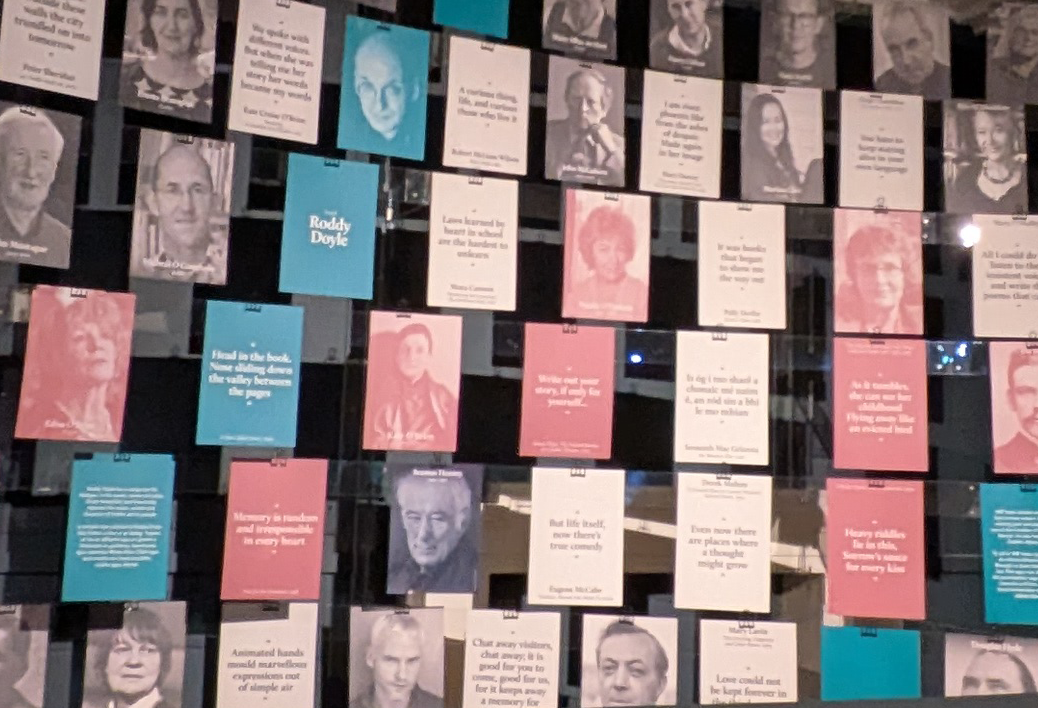
This year, TPAC took place in Dublin, Ireland. The Publishing Maintenance Working Group (PMWG) met for two full days on 26 and 27 October. As is customary, we are delivering the main outcomes for the broader digital publishing community. EDRLab members are welcome to join the next members’ circle for a deeper view and an opportunity to discuss these topics further.
Documentation: a new joint effort
EPUB documentation is currently spread across many specifications, notes, blog posts and legacy sites. Newcomers often struggle to find up-to-date resources and understand how they fit together, while non-technical readers struggle to recognise their daily reality and figure out what these standards mean for them.
To address this, the decision was made to set up a joint Working Group and Community Group task force. This group will identify the users of the specification—such as reading-system developers, publishers, independent authors and accessibility practitioners—and define their specific needs to build a multi-layered documentation strategy. As a first practical step, the EPUB repository will be converted into a clear landing page linking to both normative and informative documents. While the old IDPF site will not be removed, as W3C does not delete published material, it will prominently point to current versions.
Early discussions with the W3C documentation task force have already begun to determine how to leverage their experience in this journey toward a robust, curated, and clearly identified collection of resources.
EPUB 3.4: the final stretch
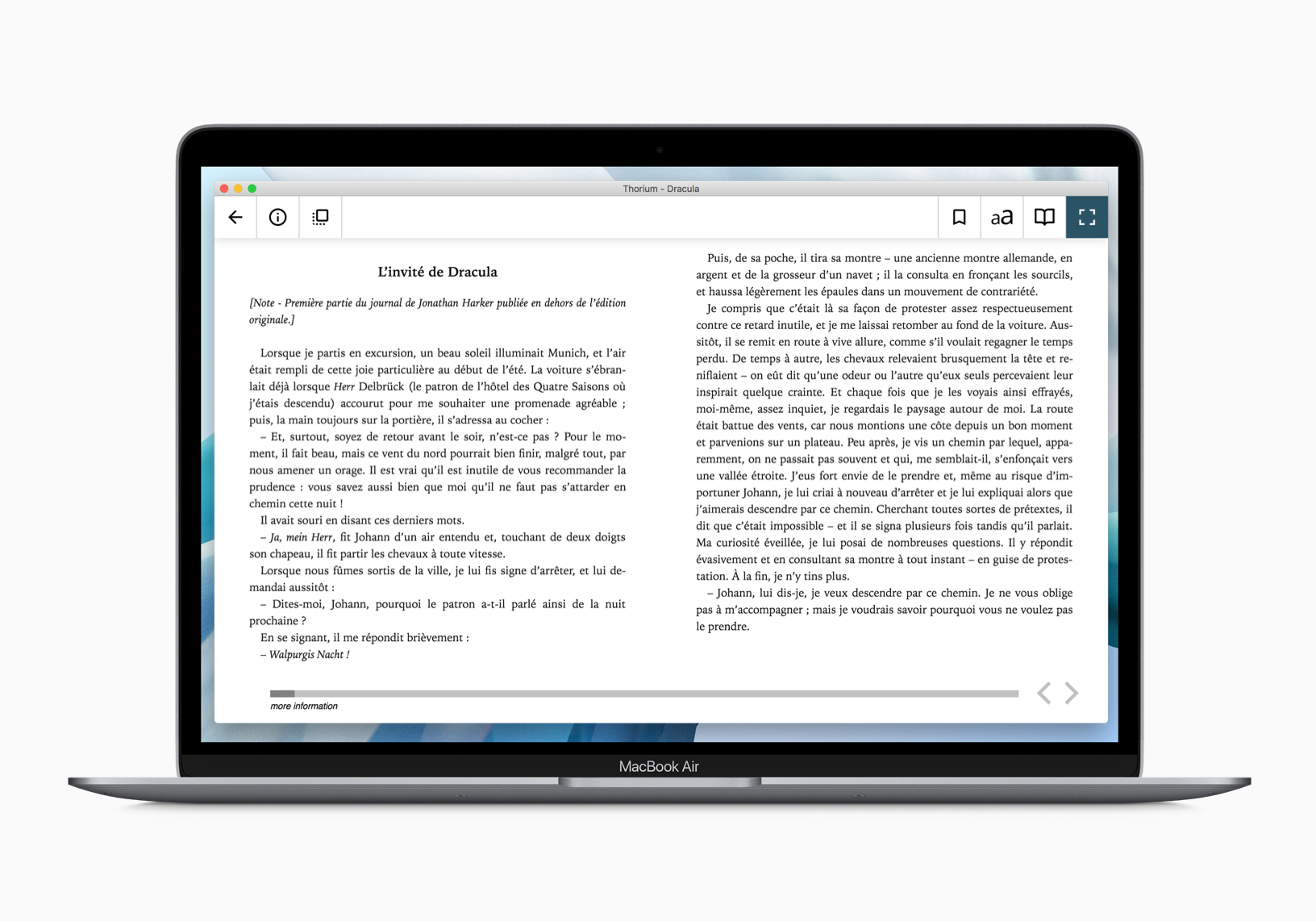
EPUB 3.4 is in good shape, though the test suite still requires more implementation results. The only genuinely new feature, roll, has already received its first test results. For other aspects, the group is considering reusing earlier tests from Apple Books and Google Play Books because their reading systems haven’t been updated recently, while newer or fast-moving implementations will undergo fresh test runs. With the current charter ending in February, the goal is to gather results by mid-December and complete the vote by the end of January. At EDRLab, we will test the different variants of Thorium Reader in early December, so anyone who relies on those will be aware of the standards support.
These discussions also raised a broader point regarding a blind angle. Currently, testing verifies whether reading systems support certain features rather than whether content producers actually use them. Evaluating the content side would require a different test suite and approach, which would in turn give reading system developers critical data on whether supporting specific features warrants their time and investment.
On the ISO side, EPUB 3.4 has progressed through the standard process without comments so far, and an upcoming ISO meeting will address next steps.
Towards EPUB 3.5: a draft charter
The proposed new charter is being finalised, and a review is due in December; it’s time to figure out if something is missing in its scope, which headlines include at this point:
- Update Media Overlays via an extension of SMIL, and leave the door open to additions such as WebVTT.
- A better way to handle full-bleed and page-fitting images like covers, light novels and image-heavy publications without breaking reflowable layouts.
- Continue the work on understanding the need for accessibility of fixed layout and roll, which may include normative changes.
- Further evolution of roll, such as multi-story or multi-chapter content.
- Review the metadata set, how it is used, and any changes needed.
- Clarifying and aligning terminology across the specifications.
- Incubate with the Community Group task forces, so that mature ideas can fast-track to the Working Group without being delayed to the next charter.
One notable decision is that EPUB CFI will not be advanced as a Recommendation-track item. While it is acknowledged that it is supported by some reading systems for internal use, there is little momentum or sponsorship to standardise it as a good interoperable mechanism, and alternative approaches now offer superior inter-system exchange.
Regarding full-bleed images, the group agreed that reading systems need an explicit signal when a spine item consists primarily of an image. While fallback images remain an option, they introduce misuse risks, making this an ongoing topic for the upcoming charter period.
The draft charter is still open to feedback until the December review. If you think a use case, a feature or a priority is missing, whether you are a publisher, a reading-system developer, a producer or a library, we want to hear from you. Share your input with the EDRLab team, or bring it to the next members’ circle, and we will carry it into the PMWG discussions. The more concrete the use case, the easier it is to make the case for it.
EPUB Annotations: a stable draft, key questions remaining
The EPUB Annotations draft is now stable, relying primarily on text-fragment selectors. During TPAC, the group focused on addressing its remaining structural questions.
Key topics included ensuring that annotation sets can be transformed into human-readable documents, so annotations remain useful when access to the publication is lost. To assist reading systems, proposals suggest adding optional context details—such as section or chapter titles—and progression values. Additionally, the group favoured lightweight guidance over a rigid processing model for handling invalid or unresolvable annotations, aligning with standard EPUB practices. Moving forward, testing the specification itself remains the top priority, requiring at least two interoperating reading systems and further implementer engagement.
The group also highlighted an active community around self-hosted reading and synchronisation solutions, including projects like KOReader and Calibre, which present valuable opportunities for future implementation partnerships.
Visual narratives: manga, comics and fixed layout
A major part of the program focused on visually heavy formats. The Japan Digital Publishers Federation (DPFJ) presented its work on manga accessibility, showcasing a proof of concept that leverages AI to generate story-focused descriptions and multi-voice audio. Their presentation highlighted existing limitations, such as SVG-wrapped images in comics lacking usable alternative text support in reading systems, speech-bubble order being difficult to map across double-page spreads, and the absence of a standardised method to reference individual panels.
These demonstrations reinforced lessons aligned with EDRLab’s long-standing vision, previously conceptualised in the DiViNa format. Long page-level alternative text is insufficient for accessible comics; content instead requires real text, semantic structure and defined reading orders. Progress will likely follow an incremental path, first addressing adapted content for specialised libraries before reaching mainstream interactive experiences.
To address these challenges, EDRLab advocates extending SMIL to enhance fine media-to-media synchronisation. This provides a practical path forward, since the industry already has tools to create, manipulate, and leverage SMIL within reading environments.
Synchronized Media
The Synchronized Media Community Group has gathered 14 use cases for a major revision of Media Overlays, covering requirements such as sign language video integration, multiple playback granularities, and seamless switching between audio tracks, screen readers and braille outputs. This community work is open to anyone; the collection of use cases is ongoing at the accessible sync media pub repo.
Addressing those use cases may also require complementary updates to SMIL profiling but, because this work is primarily oriented toward timed sync and extends broadly outside EPUB, it also explores how browser-supported solutions like WebVTT could serve the purpose.
Accessibility: AI Metadata, Extended Descriptions and Adaptation
The Accessible Platform Architectures (APA) Working Group oversees specification reviews to guarantee consistent accessibility standards across W3C specifications. When accessibility topics extend beyond the EPUB ecosystem, APA serves as the primary liaison for coordination with other groups, including joint sessions held during TPAC.
In response to emerging European metadata regulations, the groups examined machine-readable metadata formats for AI-generated alternative text. Additionally, both groups reviewed community feedback on explainers for complex image descriptions, while demonstrations from the Adapt Task Force illustrated user-customizable presentation controls and standard accessibility symbols.
One important topic for publishing is the ability to provide explicit semantic information that links images to extended descriptions of complex images, figures, and charts. As detailed in the Extended Descriptions Explainer, establishing standardised ARIA roles and linking mechanisms would let assistive technologies and reading systems programmatically identify long descriptions without disrupting the primary reading experience.
In parallel, the WAI-Adapt Task Force is advancing cognitive accessibility through the WAI-Adapt Symbols Module. As outlined in the W3C Adapt Symbols Explainer, this specification leverages the standard HTML <ruby> element to attach Augmentative and Alternative Communication (AAC) symbol sets, such as Bliss or Mulberry symbols, directly to text. This approach enables user agents and assistive tools to render familiar concepts and visual representations alongside or in place of text, helping readers with language or learning impairments.
Looking ahead
TPAC 2026 establishes a clear trajectory for the coming year. EDRLab will continue actively representing its members within the PM-WG to ensure that EPUB 3.5, EPUB Accessibility 1.3 and EPUB Annotations are practical, interoperable and fully accessible standards.
The full minutes of the PMWG will soon be available at Publishing Maintenance Working Group — Meeting Minutes. Other groups’ minutes can be found in each group repository.
EDRLab members are welcome to join our next members’ circle for a deeper look at these topics and an opportunity to discuss them with the team





 contact@edrlab.org
 +33 1 83 64 41 34